

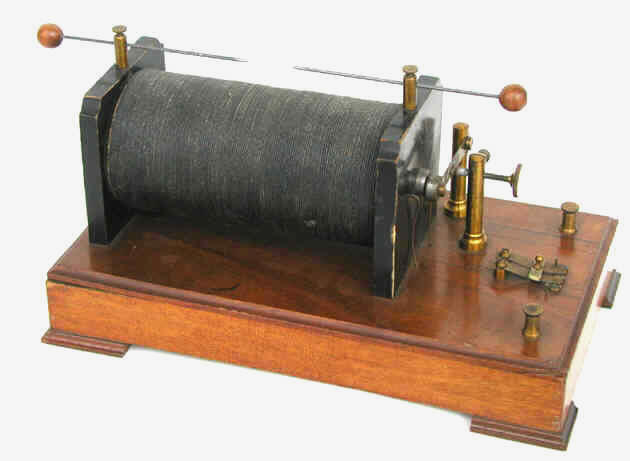
I’ve always been fascinated by the invisible forces that power our world, and induction coils have sparked my curiosity like nothing else. As someone who loves tinkering with electronics and learning how things work, I find the hum of an induction coil both mysterious and exciting. In 2025, with technology evolving faster than ever, these devices are playing a bigger role in our daily lives. Whether you’re a hobbyist like me or just curious about the science behind your gadgets, this guide will break down what an induction coil is, how it works, its modern applications, how to build one, its benefits, troubleshooting tips, and more. Let’s dive into the electric world of induction coils together!
Introduction
Imagine a device that can light up a bulb without wires or cook your dinner with a magnetic dance—that’s the magic of an induction coil, and it’s got me hooked! As a tech enthusiast, I’ve always wondered how these coils turn electricity into something useful, and in 2025, they’re popping up everywhere, from kitchens to car engines. I’ve spent hours chatting with friends about their projects involving these coils, and I’m eager to share what I’ve learned. This guide will take you through the science, practical uses, DIY potential, and even how to fix common issues, offering something valuable whether you’re experimenting or just exploring. Let’s get started on this electrifying journey!
What Is an Induction Coil?
An induction coil is like a wizard’s wand for electricity, a device that transforms low voltage into high voltage using the magic of electromagnetism. It’s made up of two main parts: a primary coil with fewer turns of thick wire and a secondary coil with many turns of thinner wire, wrapped around an iron core. I think of it as a step-up transformer that creates a powerful spark or current when powered, originally invented in the 19th century for early experiments. In my tinkering, I’ve seen it used to generate high-voltage pulses, making it a key player in everything from old radios to modern tech. It’s this ability to amplify power that makes it so intriguing to me.
How Does an Induction Coil Work?
The way an induction coil works is a beautiful dance of science that I’ve grown to love. It starts with a battery sending a low-voltage current through the primary coil, creating a magnetic field around the iron core. When the current is interrupted—often by a mechanical switch or electronic circuit—the magnetic field collapses rapidly, inducing a high-voltage surge in the secondary coil through electromagnetic induction. I’ve watched this in action with a simple setup, where a spark jumps across a gap, proving the voltage boost. The process relies on the ratio of coil turns, and I find it amazing how a quick break in the circuit can unleash so much energy, driving everything from old car ignitions to today’s innovations.
Modern Uses of Induction Coils
The modern uses of induction coils are popping up all around me, and they’re more relevant than ever in 2025. In the kitchen, induction cooktops use coils to heat pots directly with magnetic fields, which I’ve enjoyed for fast, precise cooking. Cars rely on them in ignition systems to spark the engine, a tech I’ve seen keep my old vehicle running smoothly. Medical devices like defibrillators use coils to deliver life-saving shocks, a fact that amazes me every time I think about it. Even wireless charging pads for phones leverage induction to transfer power without cords—I’ve been using one daily and love the convenience. These applications show how versatile and essential induction coils have become.
How to Build an Induction Coil at Home
Building an induction coil at home is a fun project I’ve tackled with some basic tools, and it’s doable for anyone with a bit of patience. Start with a cylindrical iron core, like a nail or ferrite rod, and wrap 100-200 turns of thick insulated wire for the primary coil—keep it neat, as I learned from a tangled mess! Then, add 1,000-2,000 turns of thinner wire for the secondary coil over it. Connect the primary to a power source with a switch or interrupter, like a buzzer, to create the pulse. I used a 12V battery and added a capacitor for safety. Test with a small spark gap, and adjust turns if the spark’s weak. It’s a rewarding way to see science in action.
Benefits of Using Induction Coils
The benefits of using induction coils are what keep me coming back to them. They’re highly efficient, converting low power into high voltage with minimal loss, which I’ve noticed saves energy in my projects. Their compact size fits into tight spaces, like car ignitions, making them practical for me to work with. They offer precise control, ideal for applications like medical devices, giving me confidence in their reliability. Plus, they’re durable with the right materials, lasting through repeated use—my homemade coil still sparks after months. These advantages make induction coils a go-to for both hobbyists and professionals, adding value to any tech setup.
Common Troubleshooting Tips for Induction Coils
Even the best induction coils can hit snags, and I’ve picked up some handy troubleshooting tips. If no spark appears, check the connections—loose wires were my first issue, fixed with a quick tighten. A weak spark might mean too few turns on the secondary coil; I added more and saw a boost. Overheating suggests a short circuit—inspect for exposed wires, as I did after a close call. If the interrupter fails, test with a manual switch to isolate the problem. I’ve learned to use a multimeter to check voltage and ensure the core isn’t saturated. These steps keep my coils humming and teach me a lot along the way.
Where to Buy Induction Coil Components
Finding induction coil components is easier than I expected with the right spots. Online stores like Amazon offer kits with wires and cores, though I sift through reviews for quality. Electronics suppliers like DigiKey or Mouser have precise parts, perfect for my custom builds—I’ve ordered from them for reliability. Local hobby shops or surplus stores carry basics like iron rods, a find I stumbled upon recently. For advanced needs, check sites like Adafruit or SparkFun. I always compare prices and check shipping to get the best deal. Shopping smart ensures my projects stay powered up without breaking the bank.
Conclusion
Induction coil basics open a world of science and modern uses, from cooking to car engines, offering efficiency and precision. Learning how they work, building one at home, and troubleshooting issues has enriched my tech journey. With benefits like durability and wide applications, they’re a must-know for enthusiasts like me. Ready to spark your curiosity? Grab the components, follow the guide, and dive into induction coils—your next big project awaits!
